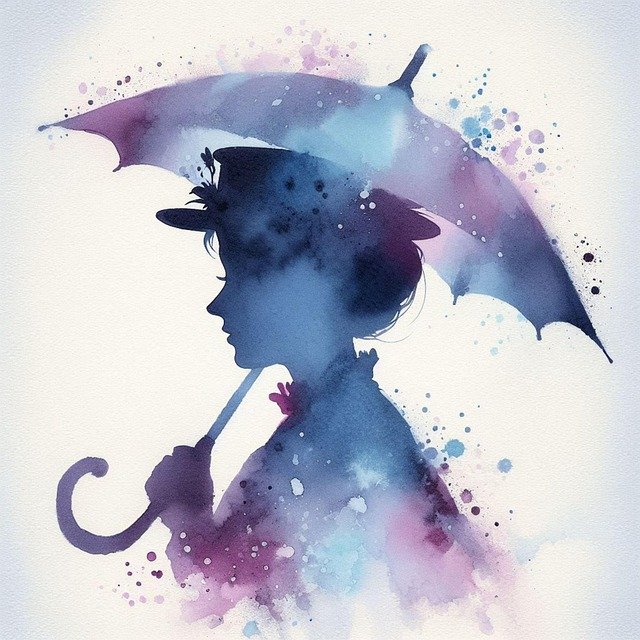
The moment Mary Poppins descended from the sky, her parrot-headed umbrella aloft, she didn't just introduce herself to the Banks children; she launched an icon into the cultural ether. More than just a whimsical prop, this seemingly simple accessory embodied magic, freedom, and practical perfection. But how has this iconic design truly evolved? The Evolution of the Mary Poppins Umbrella Design Across Adaptations isn't just a tale of visual changes in film; it’s a fascinating narrative that stretches from Victorian-era fantasy to cutting-edge urban design, illustrating how a potent symbol can inspire both faithful recreation and entirely new technological interpretations.
This isn't about minor tweaks to a prop; it’s a deep dive into how an object designed for fictional magic can spark innovation in the real world, and how its core aesthetic has remained remarkably consistent even as its underlying ideas have found new ways to take flight.
At a Glance: The Enduring Legacy of a Practically Perfect Design
- The Original Icon: The 1964 film set the standard: a dark, traditional umbrella with a distinctive parrot head handle, serving both as shelter and a magical mode of transport.
- Design Fidelity in Adaptations: Subsequent canonical adaptations, like Mary Poppins Returns and stage productions, have largely maintained this classic aesthetic, emphasizing continuity over radical redesign.
- Beyond the Screen: A Modern Muse: The concept of Mary Poppins’ magically responsive umbrella has inspired real-world conceptual designs for urban environments.
- Technological "Magic": These modern interpretations propose umbrellas that automatically respond to weather, offering shade, rain shelter, and even integrated lighting.
- Symbolic Power: Regardless of its physical form, the umbrella remains a powerful symbol of imagination, whimsy, and problem-solving.
The Unforgettable First Flight: Mary Poppins' Umbrella (1964)
When Walt Disney brought P.L. Travers' beloved nanny to the silver screen in 1964, a legend was truly born. The umbrella, clutched in Julie Andrews' gloved hand, wasn't just an accessory; it was practically a character unto itself. Visually, it was a fairly standard, albeit elegant, dark umbrella, likely black or deep navy, with a crucial distinguishing feature: a meticulously crafted parrot head handle. This wasn't just any bird; it was a characterful, talking parrot, often providing wry commentary and embodying Mary's no-nonsense, yet utterly whimsical, demeanor.
Functionally, this umbrella was dual-purpose. On one hand, it was a practical tool, shielding Mary and the children from the occasional London drizzle. On the other, and far more memorably, it was her primary mode of fantastical transportation. With a slight tilt and a gust of wind, Mary and sometimes the children would glide effortlessly through the air, carried by the magic inherent in the umbrella itself. This magical flight sequence, a blend of live-action and animation, cemented the umbrella's role not just as a prop, but as a potent symbol of escapism and boundless imagination.
Symbolically, this umbrella was rich with meaning. It was the visual shorthand for Mary Poppins' arrival and departure, signaling change and the introduction of a new, magical order into the rigid Banks household. It represented her extraordinary abilities, her ability to make the impossible possible, and the sheer whimsy she brought to life. In a world bound by rules and routine, the umbrella offered a tangible piece of joy and freedom, contrasting sharply with the mundane, often dreary, lives of the Londoners below. It quickly became an enduring cultural icon, evoking magic, wonder, and a deep sense of nostalgia for generations. For anyone looking for a more comprehensive dive into this fascinating accessory, exploring All about Mary Poppins umbrella can offer even richer context.
Practically Perfect Continuity: The Umbrella in Subsequent Adaptations
One might expect radical redesigns as beloved stories leap across decades and different mediums. Yet, for Mary Poppins’ umbrella, the story is largely one of remarkable fidelity to the original. When Mary Poppins Returns premiered in 2018, starring Emily Blunt as the titular nanny, costume designers faced the delicate task of honoring a classic while introducing a fresh perspective.
They understood the power of the original design. The umbrella in Mary Poppins Returns is, visually, almost a direct echo of its 1964 predecessor. It retains the dark canopy, the elegant silhouette, and, most importantly, the distinctive parrot head handle. Subtle refinements might have occurred in the exact shade of the fabric or the detailing of the parrot's features, but the core design principles remained untouched. This wasn't an oversight; it was a deliberate choice to maintain the immediate recognizability and symbolic weight of the object. The audience needed to instantly connect with this new iteration of Mary Poppins, and her umbrella was a crucial visual anchor for that connection.
Similarly, in stage adaptations, the challenge often lies in translating cinematic magic to live performance. While the mechanics of theatrical flight might differ, the visual representation of the umbrella itself rarely deviates far from the established icon. It’s almost always a dark, classic umbrella with the signature parrot handle. This continuity across adaptations underscores a crucial point: some designs are so fundamentally perfect and imbued with meaning that to alter them significantly would be to dilute their power. The Mary Poppins umbrella isn't just an item; it's a character in its own right, and its visual consistency helps reinforce its timeless appeal.
Beyond the Screen: Mary Poppins' Umbrella as a Muse for Modern Innovation
Here's where the "evolution" takes a truly fascinating turn, moving beyond direct adaptations of the story into conceptual design inspired by its spirit. The magic of Mary Poppins' umbrella wasn't just in its ability to fly; it was in its responsiveness to her needs, its quiet competence, and its seamless blend of practicality with wonder. This very essence has inspired designers to imagine real-world solutions for contemporary urban problems, effectively "adapting" the umbrella's magical functionality for the 21st century.
Problem Solving, Poppins Style: Urban Challenges Met with Smart Design
Think about common frustrations in urban plazas and promenades: scorching sun with no shade, sudden downpours with nowhere to shelter, and poorly lit areas feeling unsafe after dark. These are the mundane, yet impactful, issues that modern cities grapple with. Enter the conceptual "Mary Poppins umbrella" — not the flying kind, but an environmentally responsive structure designed to address these very real issues.
This is an evolution not of the look of the film umbrella (which, as we've seen, remains remarkably consistent), but of its underlying principle: a magically adaptive object that appears precisely when needed and offers multiple benefits.
Sensors and Sentience: How Technology Mimics Magic
The core of this modern design concept lies in intelligent technology. Imagine an umbrella that isn't manually opened or closed, but responds autonomously to its environment. This involves integrating sensors capable of detecting:
- Light: As the sun intensifies, the umbrella senses the increasing light levels and automatically unfurls, providing much-needed shade. Conversely, as dusk settles or clouds obscure the sun, it might retract, allowing for natural light or signaling its alternative function.
- Temperature: Linked to light, temperature sensors can fine-tune the umbrella's response, ensuring it deploys when heat becomes oppressive.
- Moisture: The moment the first drops of rain begin to fall, moisture sensors trigger the canopy to open, offering instant shelter to pedestrians. When the rain subsides, it gracefully closes.
This technological "magic" mirrors Mary Poppins' seemingly effortless control over her umbrella, making it a truly responsive and helpful element in the urban landscape.
Multifunctional Marvel: From Street Furniture to Station Signal
Just as Mary Poppins’ umbrella served multiple purposes, these conceptual designs envision highly versatile urban installations:
- Street Furniture for Rest: When closed, the structure could double as aesthetically pleasing street furniture, providing places for people to sit and rest in vehicle-free promenades. Its elegant design would contribute to the urban aesthetic, rather than detracting from it.
- Shelter Near Bus Stations: Strategically placed near bus stops or public transport hubs, these umbrellas could offer immediate shelter from sun or rain to commuters, enhancing the user experience of public spaces.
- Station Signal When Closed: In certain contexts, the closed form of the umbrella could even serve as a visual signal, indicating an available stop or information point, integrating seamlessly with smart city infrastructure.
Future Flights of Fancy: LED Lights and Interactive Elements
The vision for these adaptive umbrellas extends even further into futuristic applications, blurring the line between utility and artistic expression:
- City Decoration: Future designs propose integrating LED lights onto the surface or within the structure of the umbrella. These lights could illuminate city squares, creating dynamic and beautiful light displays after dark, transforming functional objects into decorative elements.
- Interactive Lighting: Imagine umbrellas whose LED patterns respond to pedestrian motion. As people walk underneath, lights might ripple, change color, or create interactive pathways, adding a playful and engaging dimension to public spaces. This mimics the interactive and engaging quality of Mary Poppins' world, where inanimate objects often seem to come alive.
This evolution showcases how a fictional, magical object can serve as a powerful conceptual blueprint, inspiring engineers and designers to imbue real-world infrastructure with responsiveness, versatility, and a touch of that "practically perfect" charm.
The Unseen Threads: Symbolism and Cultural Resonance
The umbrella's journey, from a fanciful plot device to a muse for urban innovation, highlights its deep cultural resonance. Its design, while simple, carries an immense weight of meaning that transcends its material form. It's a universal symbol of:
- Hope and Optimism: Mary Poppins arrives with the umbrella, signaling that change is possible, and that even the most difficult problems can be solved with a sprinkle of imagination.
- Order in Chaos: Despite the magic, Mary Poppins is supremely organized. Her umbrella, always at the ready, embodies a sense of preparedness and calm competence, even when defying gravity.
- The Power of Imagination: Perhaps its most profound symbolism, the umbrella is a gateway to a world where anything is possible, reminding us of the importance of wonder in everyday life.
- Kindness and Care: Mary Poppins uses her magic, often channeled through the umbrella, to help others. The modern conceptual umbrella similarly aims to improve the human experience in urban settings, reflecting a compassionate design philosophy.
Whether it’s the original parrot-headed wonder or a smart, sensor-driven canopy, the "Mary Poppins umbrella" continues to represent a desire for objects that do more than just exist – they improve, inspire, and elevate our experience of the world.
Dispelling the Myths: Common Questions & Misconceptions
The concept of an "evolving" design can sometimes lead to misunderstandings. Let's clarify a few common points:
Did the actual umbrella design in the Mary Poppins films change dramatically between adaptations?
Visually, no. The iconic parrot-head umbrella from the 1964 film has been largely faithfully reproduced in subsequent canonical adaptations like Mary Poppins Returns. The goal was continuity and immediate recognition rather than a radical redesign. Any "evolution" in the film context would be in the subtle refinements of the prop-making or visual effects, not a fundamental change to its look.
Is the "environmentally responsive Mary Poppins umbrella" a real product you can buy today?
Currently, no. The environmentally responsive umbrella concept, described as addressing urban plaza issues, is a conceptual design. It's an architectural and urban planning proposal inspired by the idea of Mary Poppins' magically adaptive umbrella, rather than a commercially available product. It represents a forward-thinking application of the story's themes to real-world problems.
So, the "evolution" is more about inspiration than direct alteration?
Precisely. The primary "evolution" discussed here is twofold: first, the consistent, iconic replication of the original design across canonical adaptations due to its enduring power; and second, the profound way the spirit and functionality of Mary Poppins' umbrella have inspired conceptual designs for adaptive, intelligent urban infrastructure. It’s an evolution of ideas and applications, flowing from fantasy to innovative reality.
Crafting Your Own Practically Perfect Adaptations
The journey of Mary Poppins' umbrella, from beloved prop to conceptual urban solution, teaches us a valuable lesson about design and storytelling: the most powerful ideas are often those that blend practicality with a touch of magic. It's a reminder that even the simplest objects can carry immense symbolic weight and inspire innovation far beyond their original context.
Whether you're a designer looking for inspiration, a storyteller seeking compelling imagery, or simply someone who appreciates elegant problem-solving, consider the enduring legacy of this practically perfect umbrella. Its story encourages us to look at everyday challenges not as obstacles, but as opportunities for imaginative, responsive, and utterly charming solutions. How might you, in your own way, bring a little bit of that Poppins magic into the world around you?